quantum inspire 2025
Following the 2024 collaboration with Waag Futurelab, the 2025 edition of Quantum Inspire shifted toward a more focused educational goal:
Designing interactive experiences that help HBO (Dutch university of applied sciences) students understand quantum computing through interactive experiences.
While the previous year explored broad public engagement, this iteration aimed to improve clarity, research validity, and measurable learning outcomes.
*This version only contains projects from 2025. Click here to check the 2024 version.
Timeline
04.2025 - 07.2025 Client
Research group Civic Technology, The Hague University of Applied Sciences
Role
LecturerProduct Manager
Context
The 2025 edition represents a refinement phase rather than a new initiative.
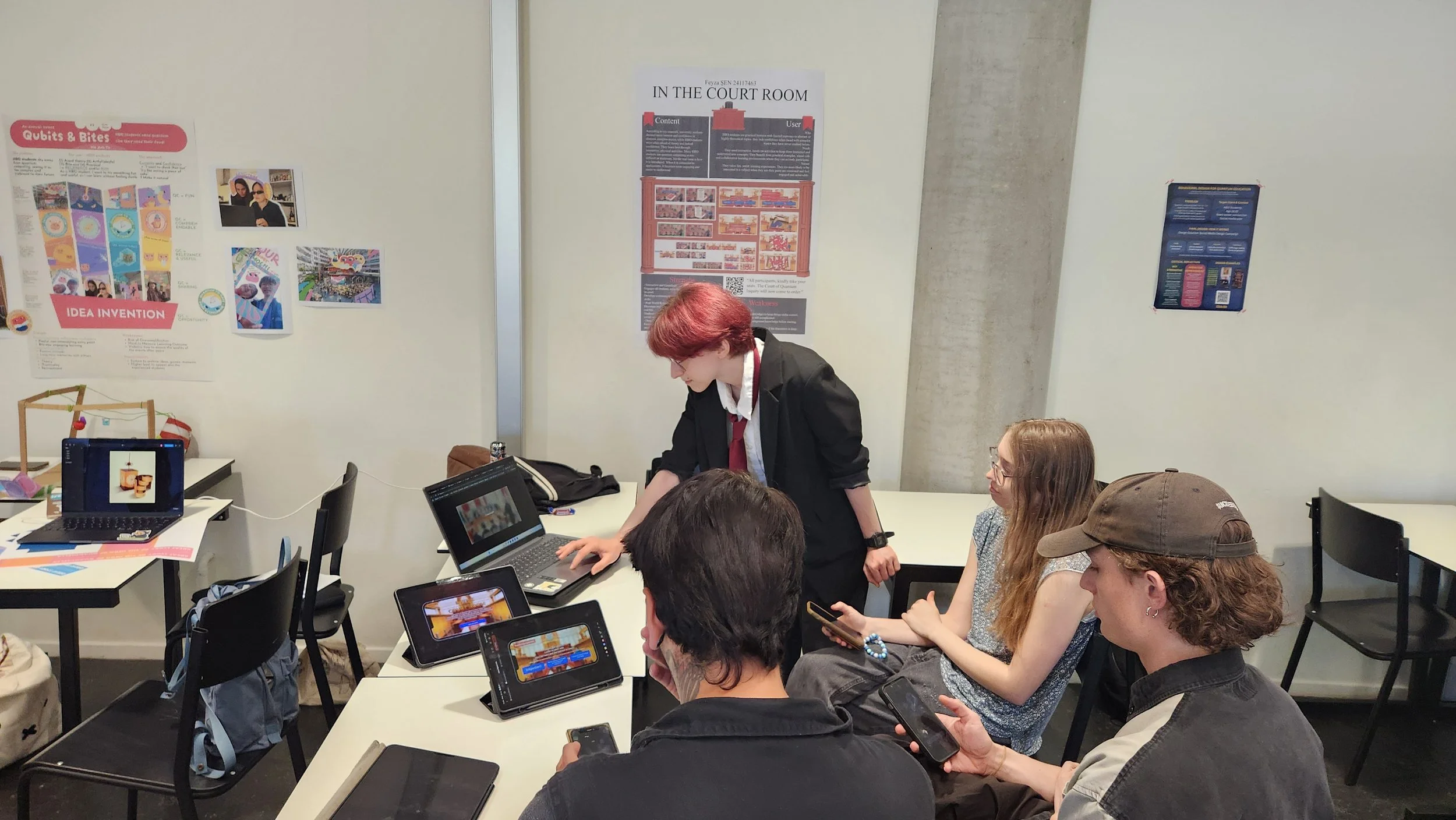
In collaboration with THUAS Civic Technology research group, I guided 17 first-year UX design students throughout the overall 8-week design process as a lecturer, supporting the delivery of student outcomes.
This project was intentionally designed as an iteration of the 2024 Quantum Inspire course. Rather than restarting from scratch, I focused on improving scope clarity, research validity, and measurable outcomes based on lessons learned from the previous year.
Problem Definition
Background
Quantum Inspire is a Dutch cloud-based quantum computing project, funded by the NWO, that expands public access to quantum technology.
The collaboration with THUAS Civic Technology research group aimed to seek ideas on how to increase students’ awareness of quantum computing.
Key Observations from 2024
-
Reflection on the previous iteration revealed two major issues:
The target group was too broad (“students” vs “tech-minded citizens”), reducing design focus.
Limited research participation weakened insight validity and measurable outcomes.
Together with the client, we refined the project scope to focus specifically on HBO students.
-
At the beginning of the course. I initiated word-cloud exercises to see how students associated quantum computing with confusion and complexity.
Quantum computing remained intimidating and abstract for students.

core problem
How might we design interactive learning experiences that make quantum computing approachable while improving research validity and measurable learning outcomes?
OKRs & Hypothesis
Objectives
Increase students’ awareness of quantum computing
Deliver outcomes that expand beyond the previous year’s scope
Key Results
Deliver 12+ diverse outcomes among 17 registered students
Students often drop the 6 ECTS project course midway. As a lecturer, I aimed to maintain engagement while delivering diverse outputs aligned with client expectations.
Increase engagement rate measured by Likert scale
Familiarity with quantum computing was evaluated before and after the course to measure project impact.
Participate in 3+ quantum-related activities
I personally set this goal to deepen domain understanding and improve guidance quality.
Guide students to involve more users in validation
30+ users for survey-based research
3+ users for qualitative research methods
I hypothesised that:
Hypothesis 1
Lecturer
Deeper understanding of quantum computing would enable better guidance and support more diverse metaphorical exploration.
Hypothesis 2
project
Narrowing the target group to HBO students would improve research relevance and participant recruitment.
Approach
My role extended beyond teaching design tools.
I focused on:
aligning client expectations with educational goals
translating complex quantum concepts into design opportunities
encouraging metaphorical thinking
structuring feedback loops for measurable improvement
Key improvement over 2024
stronger research participation and clearer measurable indicators.
process
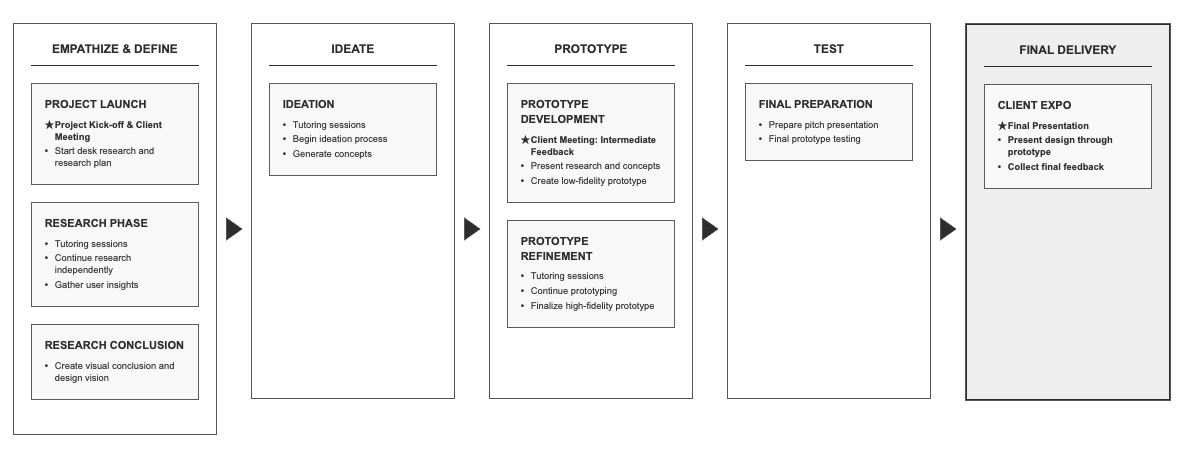
The project followed an iterative design process:
50+ in-depth interviews conducted
96+ insights extracted
3-week ideation phase
1-2 iterations per concept
feedback-driven refinement
Key insights:
Learners struggle with abstraction
Engagement increases when concepts connect to emotion or decision-making
Interactive formats reduce cognitive barriers
Overview: Design Directions
Results
Results suggest:
increased conceptual understanding
improved engagement with complex topics
stronger confidence among non-technical learners
Client feedback confirmed:
“Student outcomes were rated 10/10 in quality”
3.65
Before the course
6.07
after the course
Learning outcomes through self-assessment (n=15)
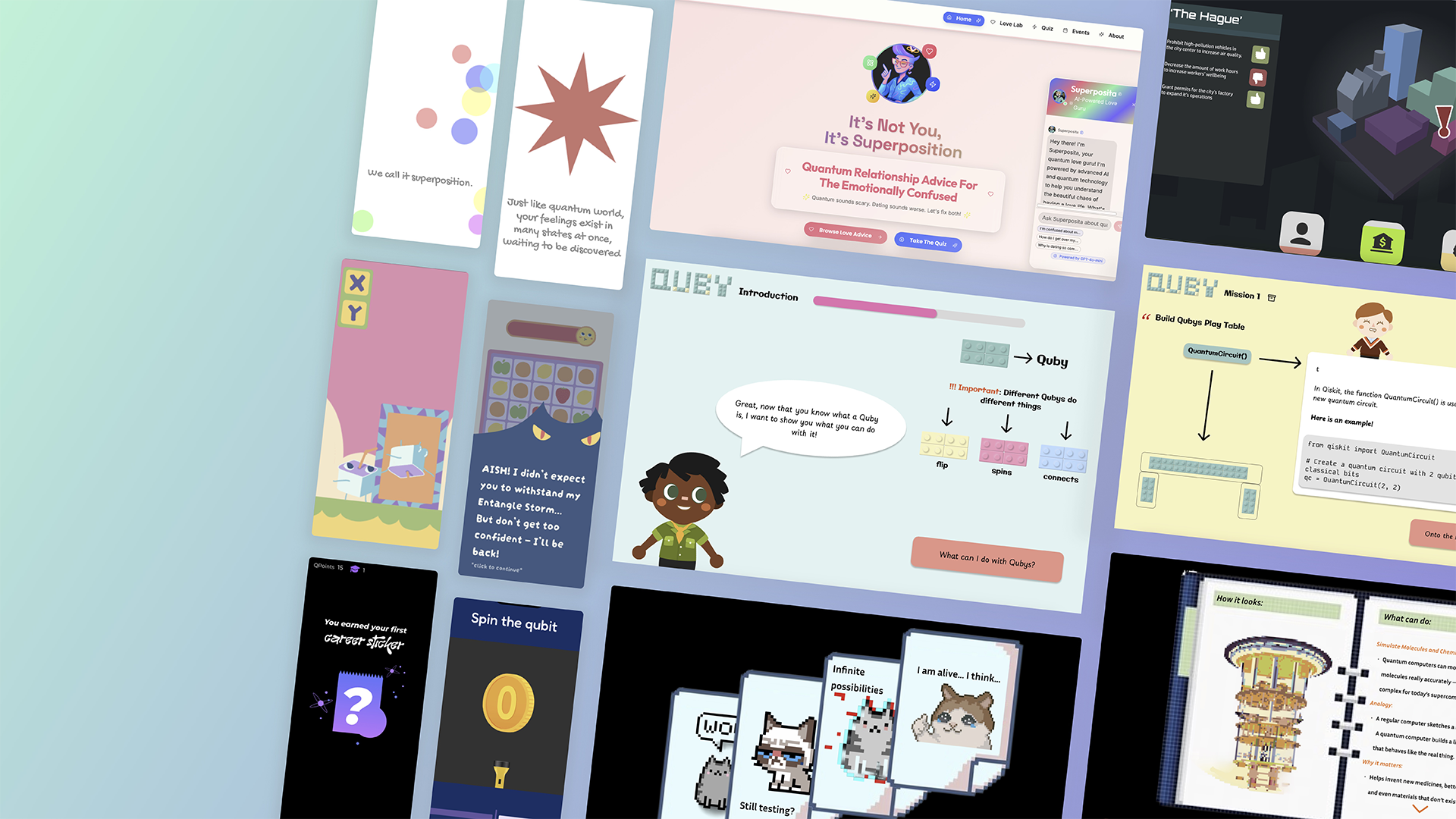
16 final design outcomes
mainly emerged in 2 directions:
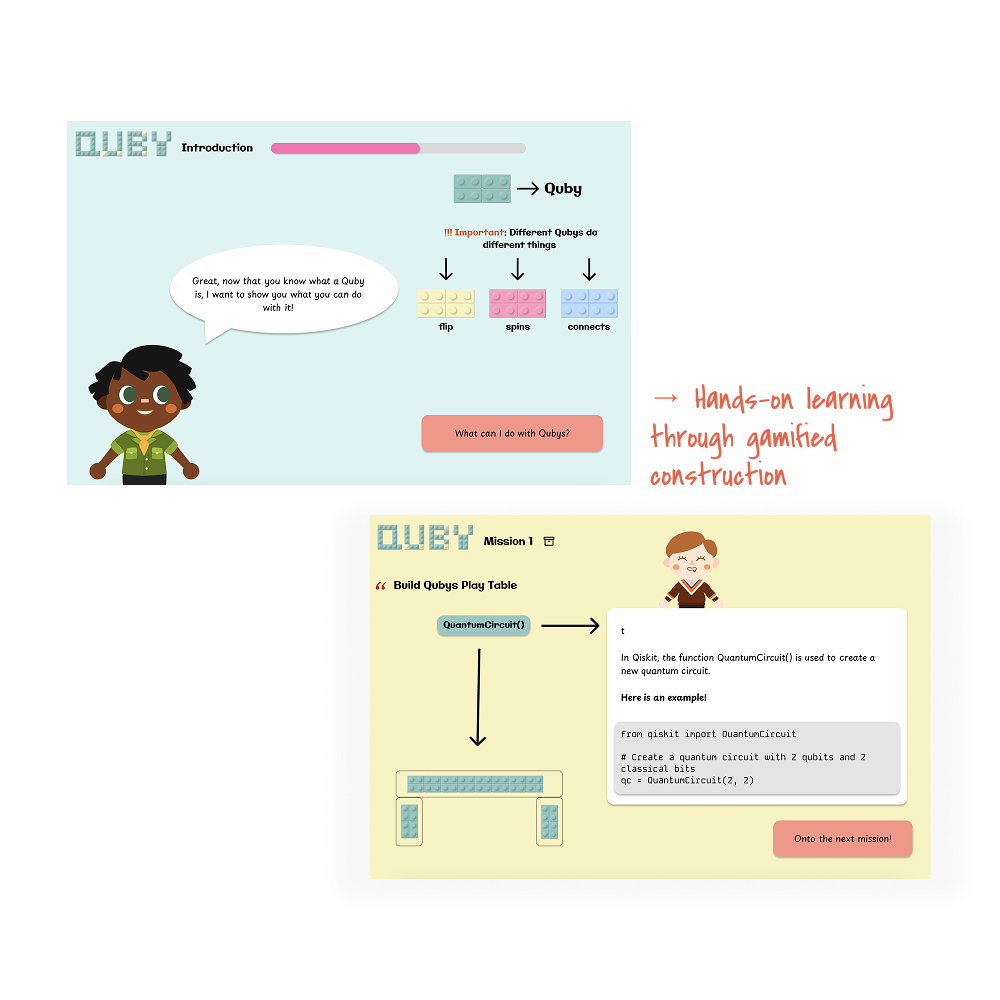
direction 1
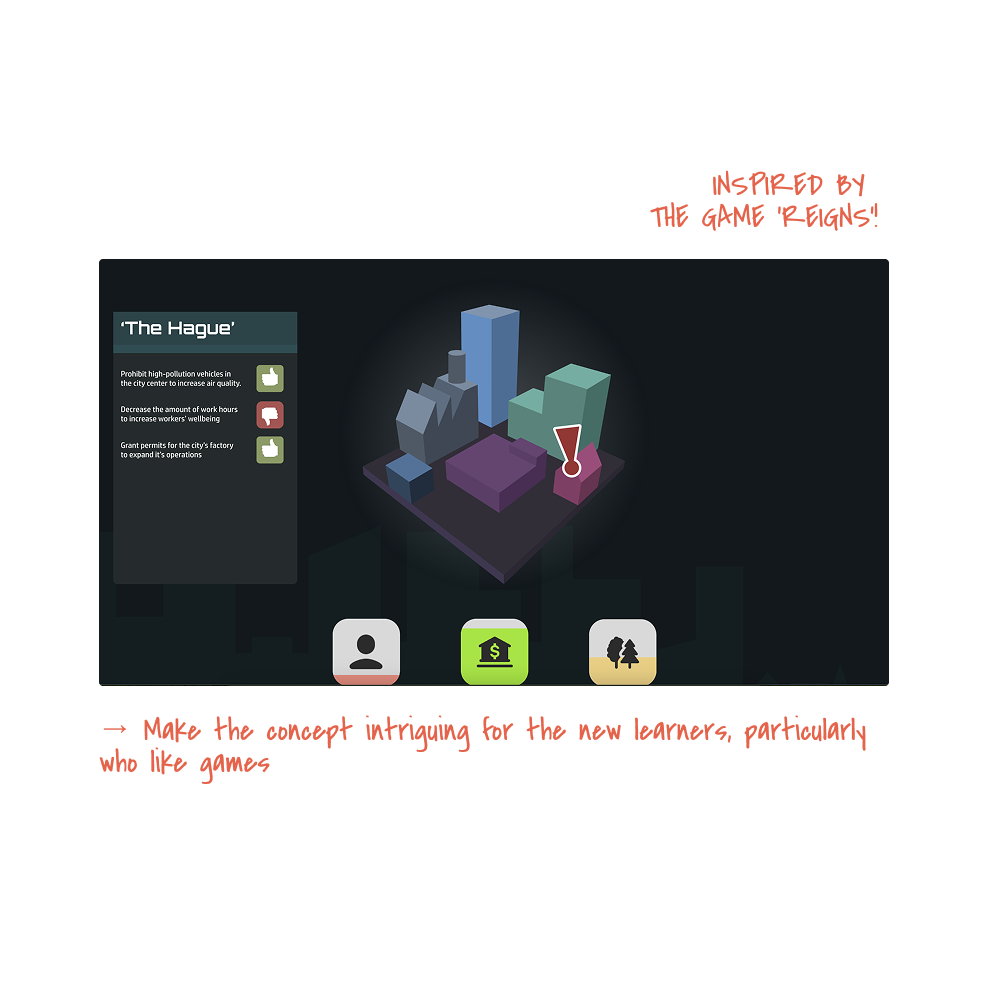
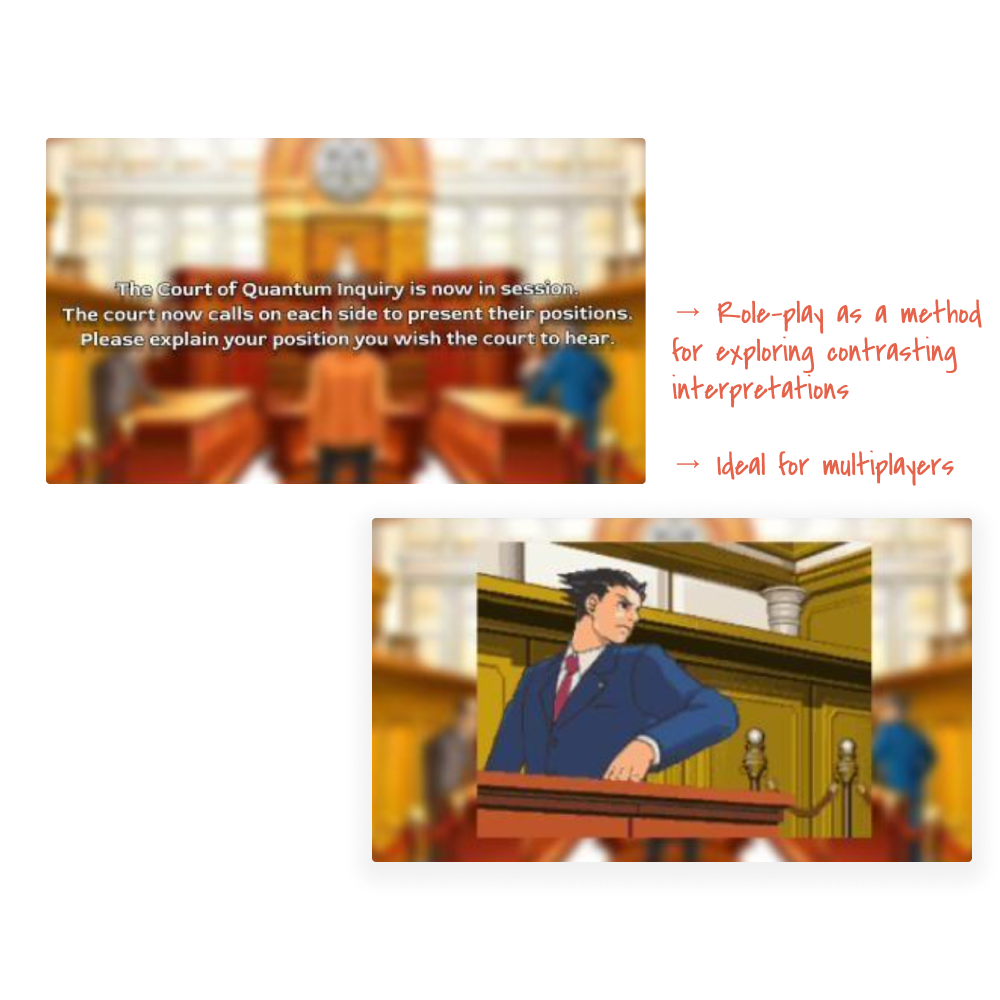
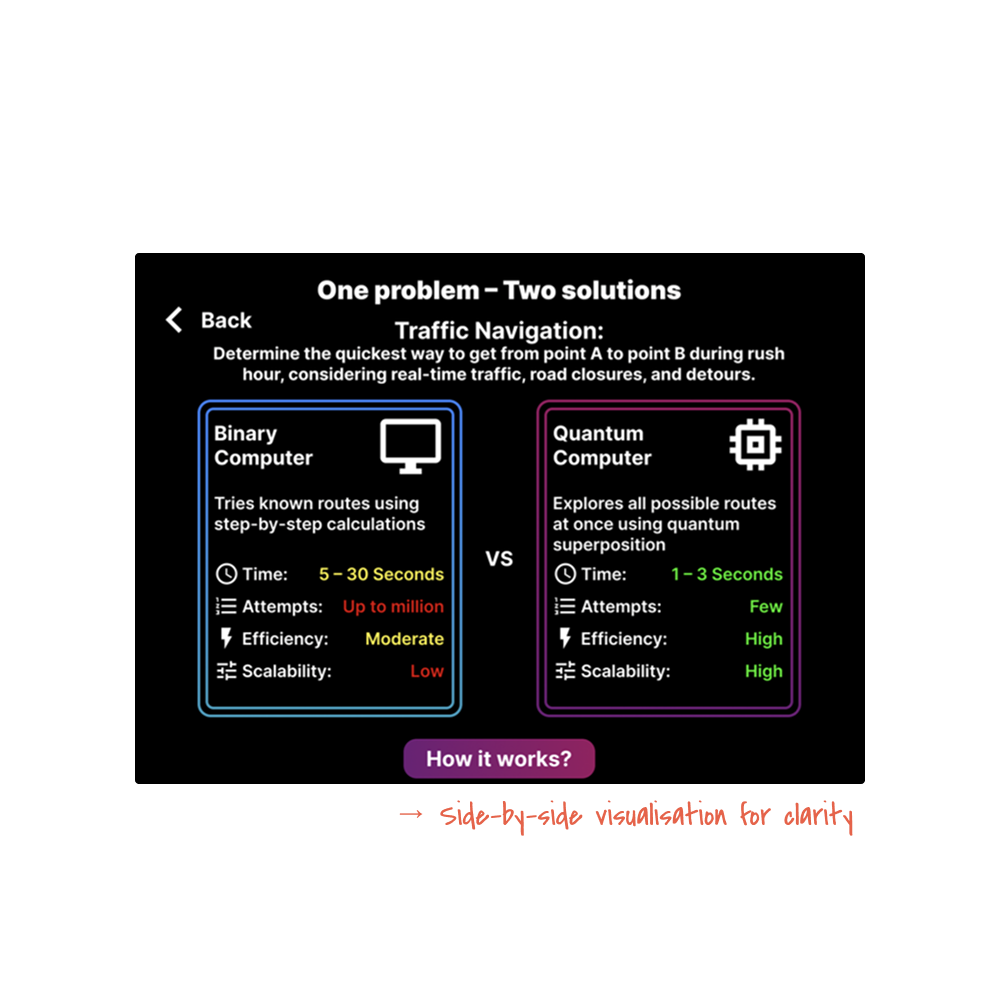
Game & Interactive Experiences
simulations
role-playing scenarios
systems thinking through play
learning by doing
direction 2
Exploratory & Reflective Concepts
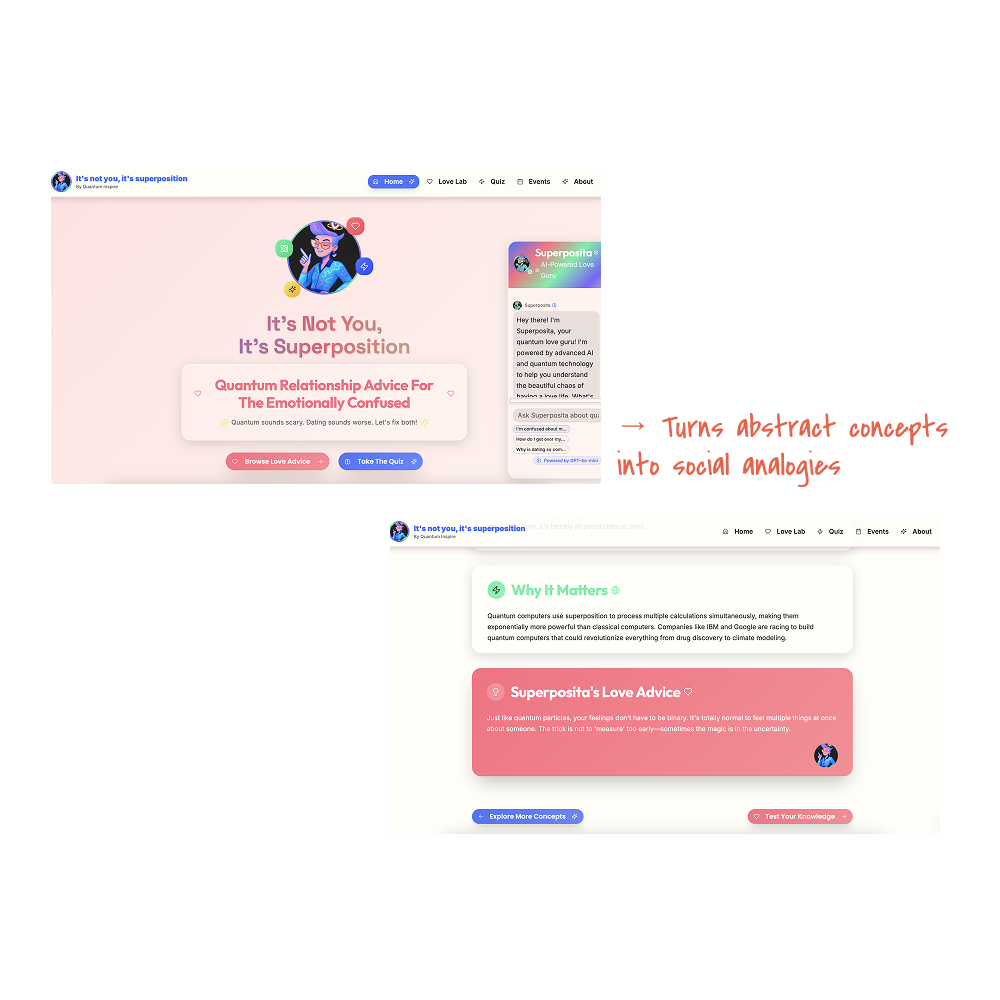
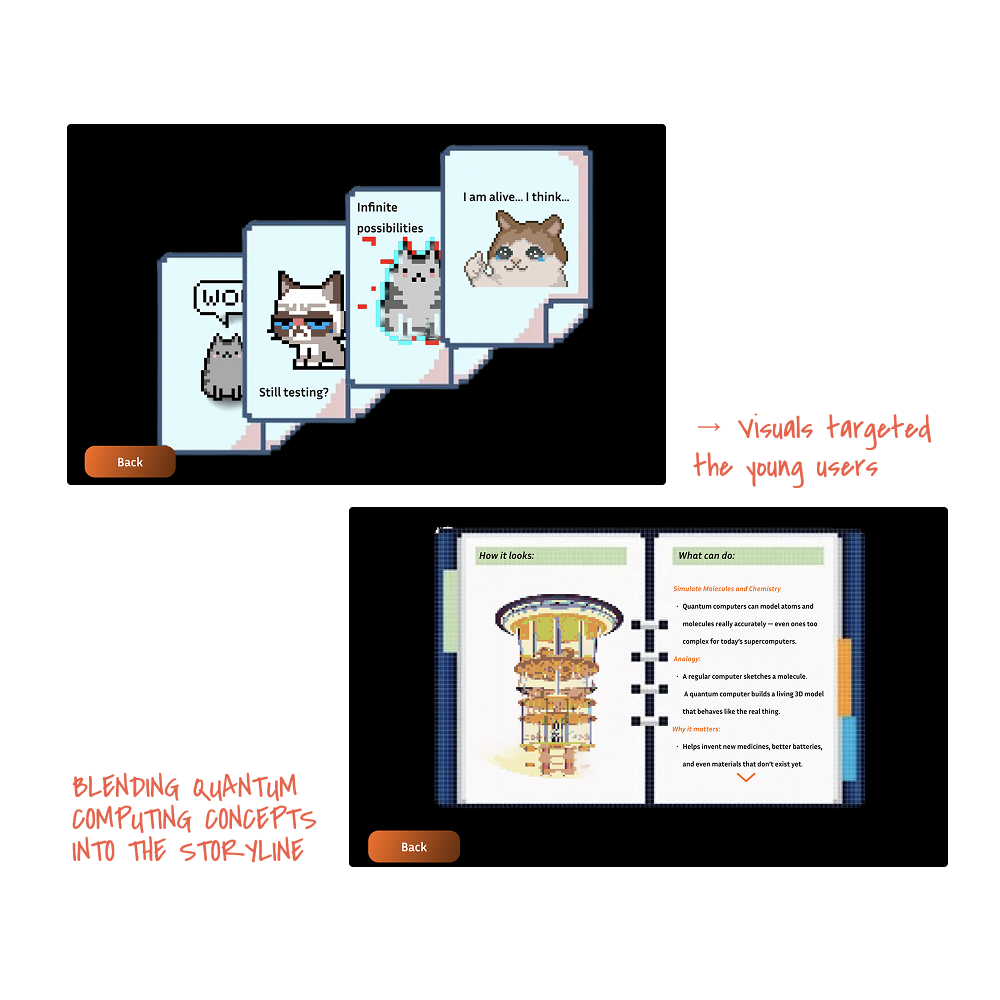
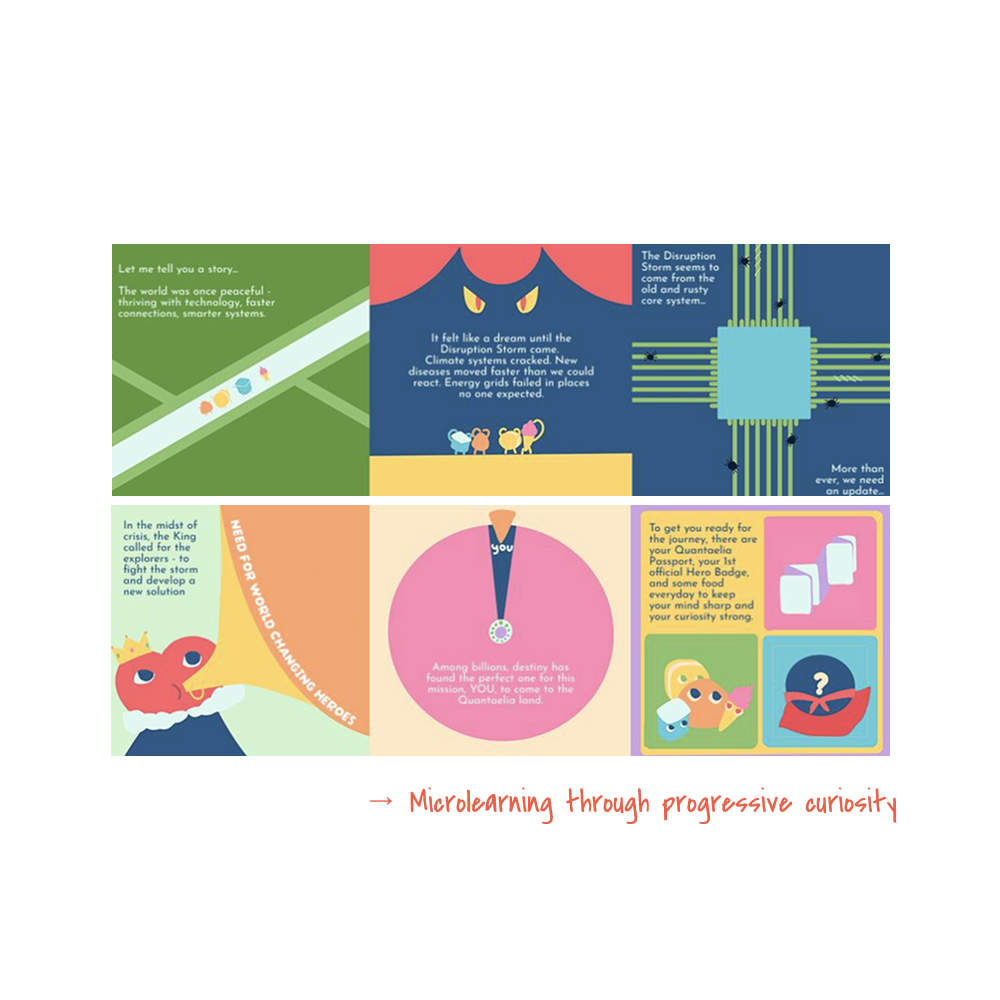
metaphor-based storytelling
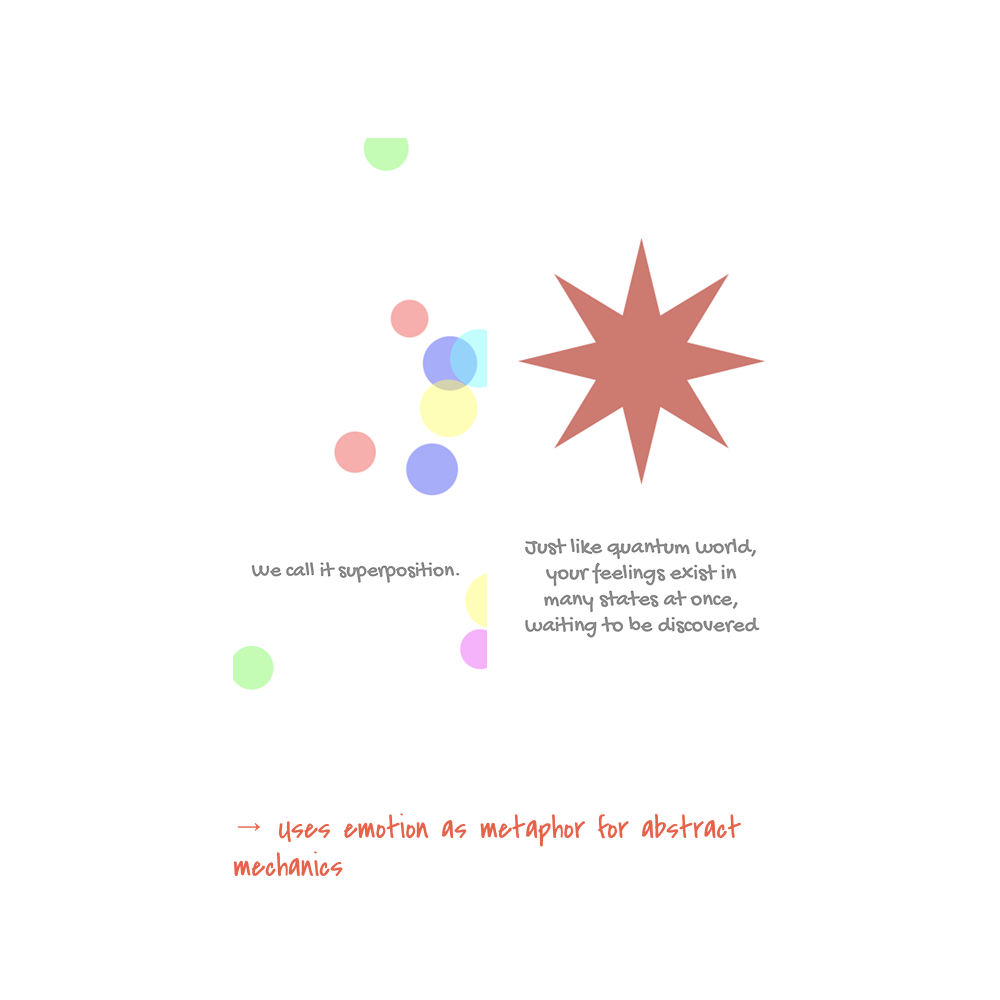
emotional framing
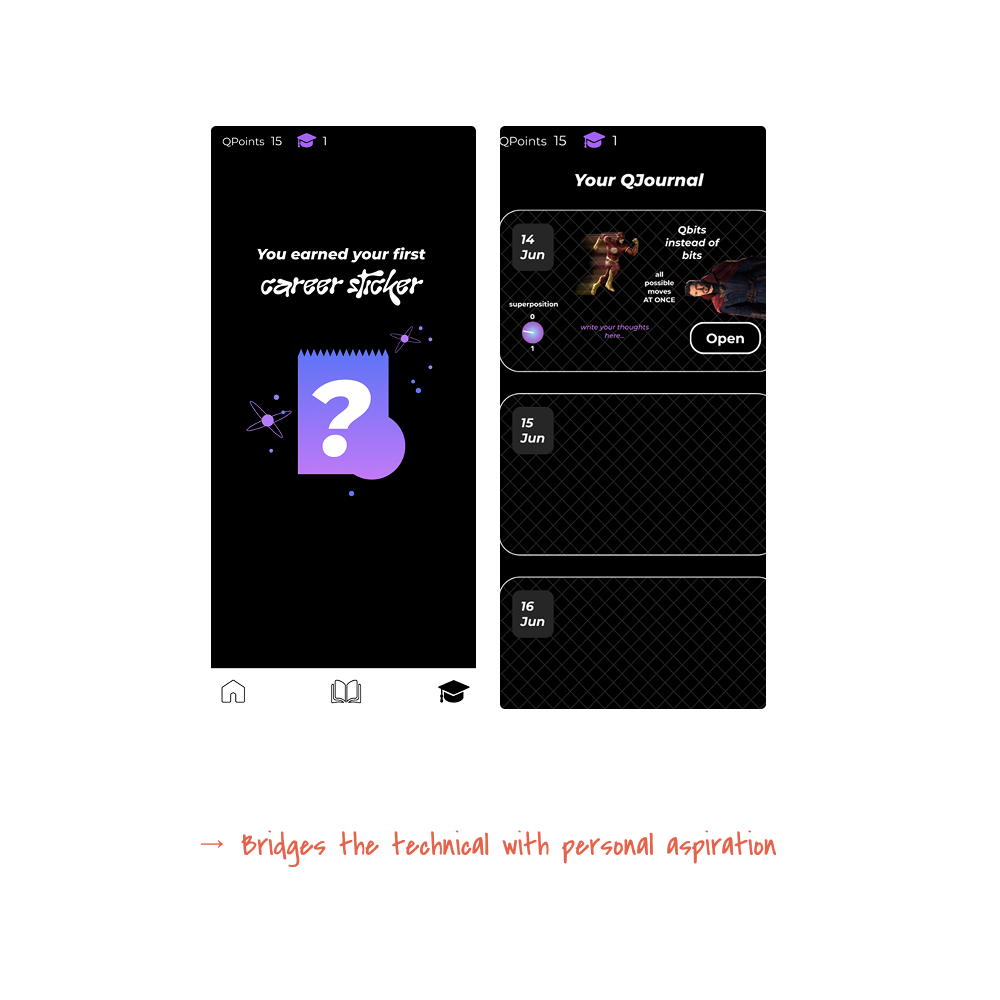
self-reflection and personal relevance
→ Narrative framing allowed abstract concepts to become emotionally meaningful.
Reflection
Compared to the previous year, I entered this iteration with deeper domain understanding.
This allowed:
more accurate concept translation
richer discussions around superposition, entanglement, and qubits
greater diversity and conceptual depth in student outcomes
Most importantly:
Educational design succeeds not by simplifying complexity, but by designing meaningful ways for learners to encounter it.
Looking back across both years, the biggest shift was moving from experimenting with possibilities (2024) to designing with intentional constraints and measurable impact (2025).